
PILATES EQUIPMENT GUIDE
Pilates Reformer Wholesale: A Buying Guide for Retailers
A reformer can look right in a catalogue and still be difficult to sell. Check what happens after delivery as carefully as what appears in the product photo.
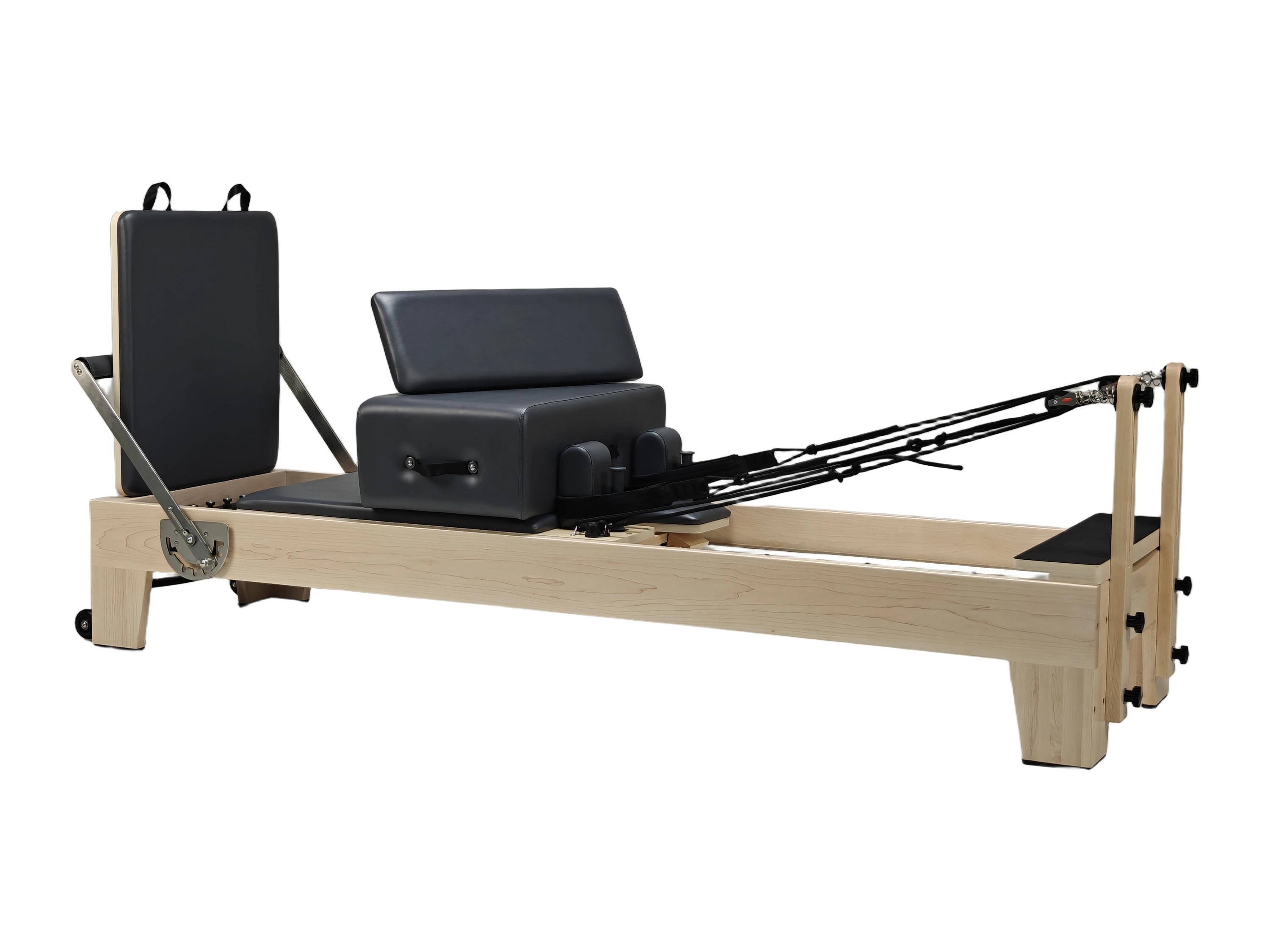
Plan a sample or mixed-model enquiry
Tell us who you sell to, the quantity per model and your destination country and postcode. If your range is not decided, describe your customers and ask which configurations to compare. There is no minimum order quantity.
A reformer can look right in a catalogue and still be difficult to sell.
It might be too heavy for a home buyer to move, arrive with unclear assembly instructions, or need a replacement part that nobody can identify. Those problems usually become the retailer’s responsibility, even when the equipment was bought from another supplier.
For wholesalers and retailers, the buying decision needs to cover what happens after delivery as well as what appears in the product photo.
Keep sample and stock quotations comparable
For example, a retailer evaluating one sample before a six-unit mixed order should request two clearly labelled quotations. List each model and quantity, the accessories, packaging and any branding requirement. Confirm which sample details will remain the same in the stock order.
Keep a record of configuration changes between quotations. Ask how parts are identified, what evidence is needed for a damage report and which costs are covered by the written terms. Do not promise your own customers a delivery date or replacement time before it is agreed.
Start With the Customer You Already Serve
Before choosing models, look at the questions your customers ask.
A home buyer may need to put the reformer away after each session. A studio owner may care more about adjustments between users and how quickly a worn component can be replaced. A distributor supplying both groups needs clear differences between the models it stocks.
- Home users: Can they move and store it? What assembly and instruction will they need?
- Studios: Does the configuration suit their teaching programme and daily use?
- Other retailers: Can they explain the product accurately and obtain support after a sale?
Build your opening range around those needs. Several nearly identical models can create more work without giving customers a useful choice.
Make the Sample Order Answer Specific Questions
A sample is most useful when you decide what to inspect before it arrives.
Ask for the exact configuration you intend to sell, including the accessories and packaging. Record what was agreed so you can compare it with the delivered machine.
During the inspection, check:
- Carriage movement through its usable travel
- Footbar adjustment and locking operation
- Access to springs and other adjustment points
- Rope and strap adjustment
- Upholstery seams, exposed edges and finish
- Assembly instructions and accessory identification
If you plan to stock a folding model, operate the folding mechanism yourself. Check where removable parts go, how the machine is secured for storage and whether moving it is practical for the intended customer.
Keep photographs and notes. They give you a reference when checking later orders or discussing changes with the supplier.
Confirm What “Included” Means
A product photograph may show a sitting box, jumpboard, straps or other accessories. That does not establish what comes with your order.
Request a written packing list for each model. It should identify the machine configuration, included accessories, upholstery colour, finish and any agreed branding.
Use that same list when preparing your own product page. If an accessory is optional, label it clearly. Customers should be able to understand what they will receive without interpreting a styled photograph.
For private-label orders, approve the logo artwork and placement separately. Confirm which surfaces can carry branding and whether the packaging design is included in the agreement.
Check the Packaging Before Ordering in Volume
Packaging affects both freight planning and the condition in which the customer receives the equipment.
Ask for packed dimensions, gross weight, package count and photographs of the packed model. Check how accessories are secured and how finished surfaces are protected from contact during transport.
Then consider the last part of the journey. A delivery to a commercial receiving area is different from a delivery to a home with stairs and a narrow entrance.
Make the delivery scope clear before promising it to your customer. Confirm whether unloading, indoor placement, upstairs handling and assembly are included or require separate arrangements.
Get the Spare-Parts Process in Writing
“Spare parts available” leaves several questions unanswered.
Ask how a customer identifies the correct spring, rope, wheel or upholstery component. Can the supplier provide a part number, labelled photograph or model-specific reference?
Also establish:
- Who receives a fault report
- What photographs or video are needed
- How replacement parts are approved
- Which costs fall within the written warranty
- How changes to a model are recorded
Keep the model and configuration details with each sale. If a component changes between production runs, a product name alone may not identify the correct replacement.
Compare Delivery Terms on the Same Basis
Two freight quotations may cover different responsibilities.
DDP can simplify the process where it is available, but the destination and delivery scope still need confirmation. Other terms place different responsibilities on the buyer.
Give each supplier the same destination details and ask for a written explanation of what is included. Avoid comparing a quotation to a port with one that includes delivery to the customer’s address.
For a resale business, this matters beyond the first shipment. You need delivery information that your sales team can explain consistently.
Build Product Pages From Verified Information
Your supplier’s description is a starting point. Check it against the sample and agreed configuration before publishing it.
Useful retail content includes:
- Clear photographs of the actual model
- Demonstrations of adjustments and storage
- Operating and storage dimensions
- Included and optional accessories
- Assembly requirements
- Written warranty and support arrangements
Use images and videos you own or have permission to publish. Confirm that any customer photographs, logos or testimonials are authorised for your use. Avoid borrowing another brand’s claims, model names or promotional footage.
A short, accurate product page is easier to support than a long description full of promises your team cannot verify.
Discussing a Wholesale Order With Atuspilates
Atuspilates is the Pilates equipment brand of Shijiazhuang Atus Trade Co., Ltd., a trading and supply company.
There is no minimum order. Single units, samples and mixed-model orders are welcome. Private-label options can be discussed for the selected configuration.
Direct orders begin with a proforma invoice before payment. Payment terms are a 30% deposit by bank transfer, with the balance due after you have checked your order’s pre-shipment QC video and before dispatch.
DDP delivery is available to most countries, with export and import customs clearance, import duties and door delivery handled within the confirmed quotation scope. EXW, FOB, CNF and FCA terms are also available.
Browse the product range, or send your models, intended customers and delivery destination to discuss an order.
PLAN YOUR OPENING RANGE
Choose models to evaluate before stocking a range
Start with the type of customer you already serve. Review the current product pages, then request the exact configuration and included accessories for your sample.
- ATUSCC001 reformer: an option to evaluate for a dedicated exercise room or studio range.
- ATUSHF002 folding reformer: compare the working footprint, folded storage and handling requirements for home customers.
- ATUSCC022 reformer: compare its adjustments and configuration with your teaching or retail requirements.
What to include in a wholesale enquiry
Send the model codes, quantity per model, destination country and postal code, intended use, and any branding request. For a mixed order, list each model separately. Ask us to confirm accessories, packing, delivery scope and the written support terms in your quotation.
You can begin with one unit; there is no minimum order. Sample, branding and freight costs depend on the agreed order and are confirmed in the quotation.
Discuss your resale range
Tell us your customers, selected models and delivery destination. We can discuss configurations, samples and freight options.