
PILATES EQUIPMENT GUIDE
Pilates Reformer Board vs Mini and Full-Size Reformers
A board, a mini reformer and a full-size spring machine can offer different setups. Compare the exact mechanism and intended use before choosing equipment for your room or business.
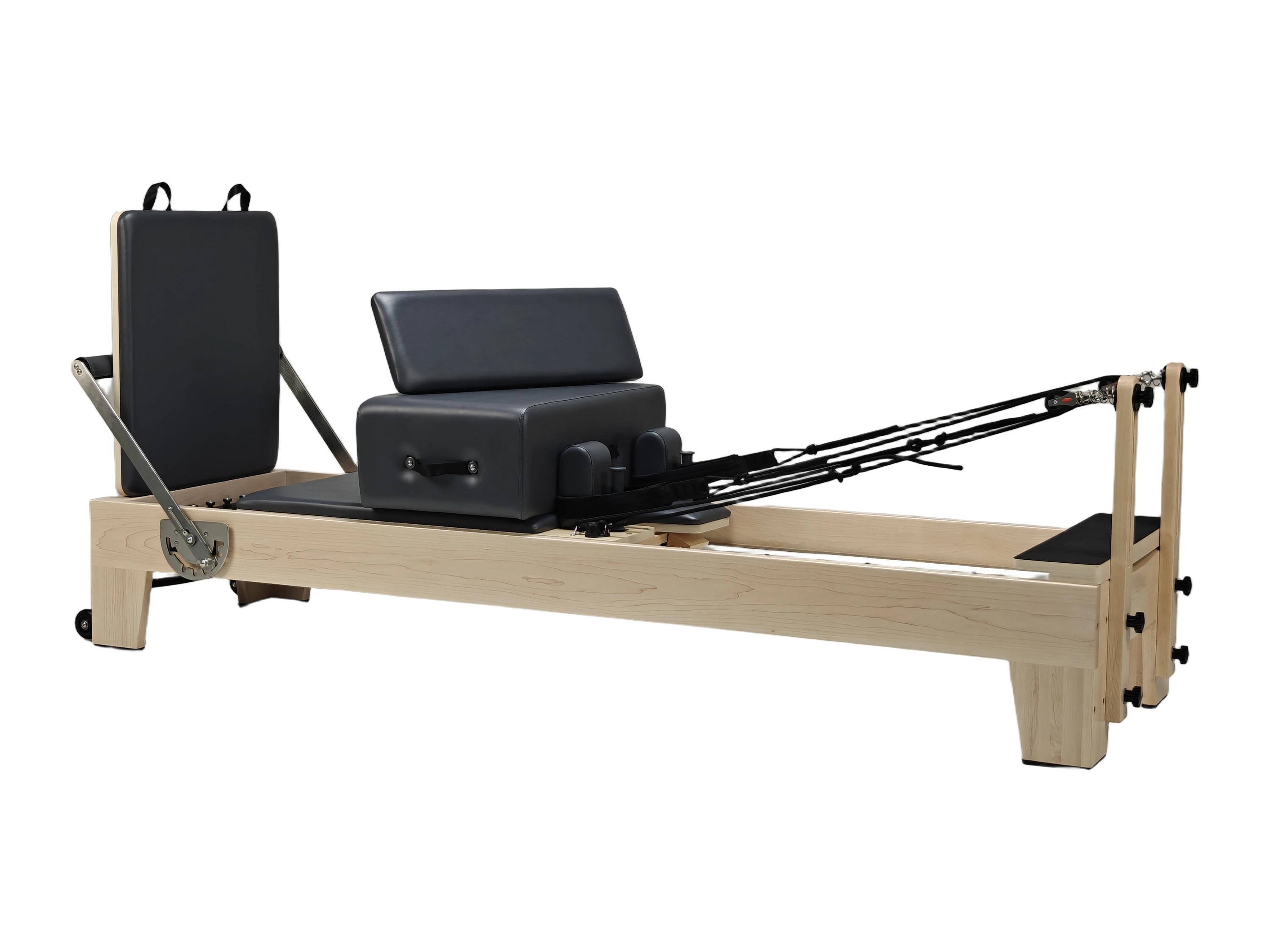
A Pilates reformer board is not automatically the same equipment as a spring reformer. “Board” and “mini reformer” are used for different designs, so the name alone cannot establish the resistance, support or exercises available. A compact device may suit its intended sessions; check those sessions and the equipment together rather than assuming it replaces a full-size machine.
Identify the design behind the name
Start with what moves and what supplies resistance. A board may have sliding sections, pads, handles, bands or another arrangement; the combination varies by model. A mini reformer may be a compact band-based device or a shorter machine with a different mechanism. Read the exact instructions instead of borrowing specifications from a similar-looking product.
A full-size spring reformer uses a carriage supported by a frame and rails, with springs providing resistance. Its adjustments, straps and supports still vary between models. Also distinguish a standalone exercise board from a jumpboard accessory that attaches to a reformer: an accessory photograph does not show a complete standalone machine.
Compare the mechanism, not just the footprint
| Type | Purchasing checks |
|---|---|
| Reformer board | Mechanism: identify the moving parts and any resistance elements; do not assume every board uses bands. Support: check pad areas, handles and approved positions. Space: include the movement path and required surface. Parts: request identifiers for the fitted pads, sliders or resistance elements. |
| Mini reformer | Mechanism: establish whether it uses bands, cords, springs or another system. Support: check usable travel, contact areas and adjustments. Space: obtain operating and storage dimensions separately. Parts: confirm replacements for that model and configuration. |
| Full-size spring reformer | Mechanism: verify the carriage, rails and spring arrangement. Support: inspect the footbar, carriage, ropes and approved accessories. Space: allow for access and the intended exercises. Parts: confirm spring, rope, strap and carriage-component ordering. |
Request written user limits and intended home or commercial use. Resistance labels are meaningful within the specific system; do not equate a band label or spring colour across unrelated products. Show the proposed equipment to the instructor whose sessions you plan to follow, since those sessions may depend on supports or movements it does not provide.
Measure working space and storage separately
Mark the open equipment on your floor, then include the space required for your body, access and any moving components. Ask which floor surface and setup the manufacturer specifies. The stored outline of a board or folded machine is not its operating area.
Request assembled, approved storage and packed dimensions as separate figures. Check doorways, stairs and tight turns along the delivery route. For movable equipment, ask how it is lifted or rolled and whether assistance is needed. For a folding mechanism, request the locking and opening procedure; do not assume a model can stand upright. Our foldable reformer guide covers the storage questions in more detail.
Ask for one continuous demonstration
A montage can hide setup steps and show accessories from another configuration. Request an unedited video identifying the exact model and included equipment, with these actions shown clearly:
- Unpack or lay out the main parts, identify any optional accessories and set up the equipment as instructed.
- Show the underside or mechanism, then move the platform or sliding section through its usable travel.
- Demonstrate how resistance is attached or adjusted, including any locks, clips or anchor points.
- Show the supports and positions approved for the intended sessions, with the whole device visible.
- Return the equipment to its approved storage arrangement and show the parts inspected before use.
A supplier video helps identify what is being supplied; it is not personal exercise instruction or a guarantee of safe use. Compare it with the written instructions. Ask how wear or damage is recognised, when use should stop and how replacement parts are identified. Use the manual for the model supplied; general spring-equipment safety and maintenance resources cannot establish another product's limits.
Apply the comparison to your purchase
Home example: suppose you need to clear a room after each session. Compare setup time, the approved storage method and the instruction you intend to follow. A board may fit the routine you want; a spring-based programme may require different equipment. A smaller stored size does not answer that choice.
Studio example: suppose several users will share equipment throughout the day. Ask for written commercial-use suitability, adjustment procedures, cleaning instructions and a maintenance plan. Let the instructors review a sample before standardising a class setup.
Retail or wholesale example: suppose your range includes compact boards and spring machines. List the actual mechanisms and included items separately. Confirm sample availability, replacement-part identification and permission to use product media. Do not present a compact product as functionally identical to another category without evidence.
Request a full-size reformer comparison
For standard spring-reformer purchasing, review the Oak Pilates Reformer ATUSCC011 and Maple Pilates Reformer ATUSCC001. These are full-size equipment references, not board offers. Ask for their current written configurations, dimensions and included accessories; product photographs alone do not define your order.
Shijiazhuang Atus Trade Co., Ltd. is a Pilates equipment trading and supply company. There is no minimum order quantity; single-unit, sample and mixed-model orders are welcome. Our warranty is 3 years on the frame and 1 year on other components. Request the coverage, exclusions and replacement-part shipping responsibilities in writing.
DDP is available to most countries, with destination availability and delivery scope confirmed in the quotation. Mention stairs and unloading restrictions; door-to-door delivery does not by itself confirm indoor placement or assembly. UK buyers can also use our UK reformer purchasing checklist.
Copy these details into the enquiry form:
Intended use: home / studio / retail or wholesale. Equipment type and models being compared: __. Quantity: __. Country and postcode: __. Available operating and storage space: __. Planned sessions and required supports: __. Please confirm the mechanism, current configuration, included items, demonstration video, replacement parts, warranty and delivery scope.
Send your equipment requirements to request a quotation.
Quick answers
Does “mini” mean a smaller spring reformer?
No. Establish the mechanism from the exact specification and demonstration.
Can I follow the same class on a board and a spring reformer?
Check the class requirements for a footbar, supports and movement travel against the exact equipment instructions. Confirm the proposed setup with the course instructor; do not assume the devices are interchangeable.
Does folding reduce the space needed during use?
Not necessarily. Compare the assembled working area separately from storage.
Compare full-size equipment for your order
Send your intended use, models, quantity, operating and storage space, and delivery country and postcode. We will confirm the current configuration and quotation scope.