FIRST REFORMER CLASS
What to Wear to Reformer Pilates
Fitted, stretchy clothes that stay in place, plus the footwear your studio requires. Here is what to choose, what to leave in your bag, and what to check before class.
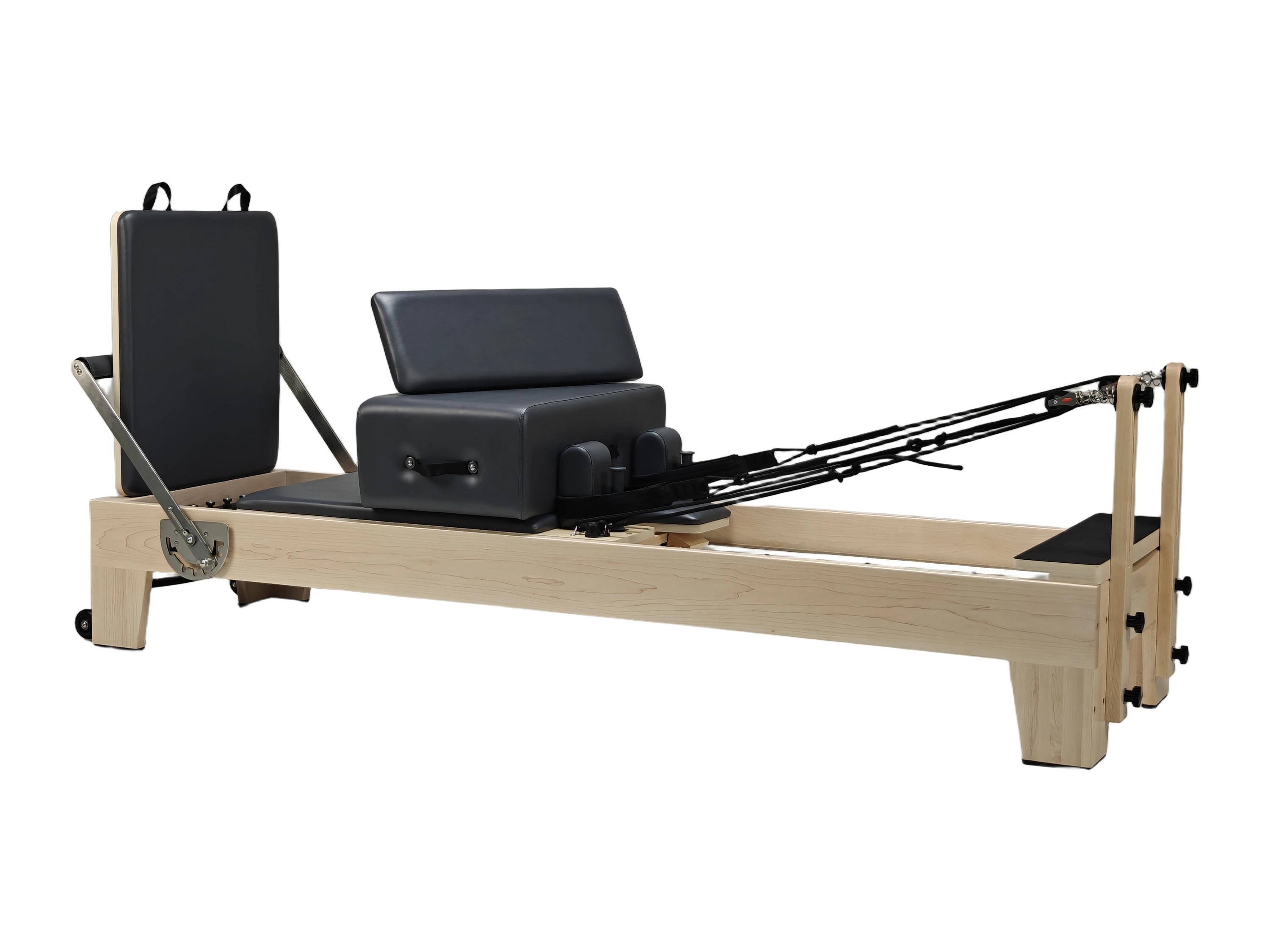
Short answer: fitted, stretchy clothes you can move in, plus the footwear your studio requires. The longer answer matters because a reformer is not a yoga mat. You will be lying, kneeling, and standing on a carriage that rolls, with springs, straps, and a footbar all in play. What you wear changes how safe and comfortable that feels — and how well your instructor can check your form.
Why Clothing Matters More on a Reformer
On the mat, a baggy shirt is just a baggy shirt. On a reformer, loose fabric can catch in the springs or under the carriage, and a drapey top falls over your face whenever your head drops lower than your hips. Instructors also coach by looking: they watch whether your ribs flare, your pelvis stays level, and your knees track straight. Clothes that hide your shape hide that information. You do not need special gear — you need clothes that stay put.
Grip Socks: Check Your Studio’s Policy
Check your studio’s footwear policy before class: some require grip socks, while others allow bare feet. Grip socks have non-slip material on the sole to help with traction. Ordinary socks can slip on equipment surfaces. Fit and condition matter too; grip socks do not replace controlled movement, suitable exercises or an instructor’s guidance.
Tops: Fitted, Tuckable, Nothing Dangling
Choose a top that fits close and stays where you put it — a fitted tee or tank in a stretchy fabric, or a longer top you can tuck in. Avoid:
- Loose, flowing tops that fall toward your face in inverted positions
- Long drawstrings, ties, or dangling sleeves that can catch in springs
- Thick seams, back zippers, or big buttons — you spend much of the class on your back, and hardware digs in and scratches the carriage upholstery
Bottoms: Leggings Win, Zippers Lose
Leggings or fitted training tights are the default for a reason: they stretch through the full range, stay in place, and let your instructor see your knee and hip alignment. Fitted shorts with a compression liner underneath also work well.
Loose gym shorts are the one popular choice that causes trouble — in leg straps and inverted positions they end up somewhere you did not intend. Keep shorts fitted and longer, or wear liners underneath. And whatever you choose, skip zippers, rivets, and chunky pockets: exposed hardware can press into your back or damage upholstery. For men, the same logic applies — fitted shorts over a liner, or training tights.
Hair, Jewellery, and Small Details
- Hair up. Long hair gets caught under shoulders and near the springs. Secure it away from moving parts, and choose a style that lets your head rest comfortably when lying down.
- Jewellery off. Rings catch on straps and scratch equipment; necklaces and bracelets swing and tangle. Leave them in your bag.
- Light layers for the start. If the room is cool, a light fitted layer you can peel off after the warm-up is handy.
- Skip heavy perfume. Close quarters, shared equipment, deep breathing. Enough said.
Follow your studio’s arrival instructions, bring water, and tell the instructor if this is your first reformer class. Check the sock policy before buying anything.
Quick FAQ
Can I just wear normal socks?
Ask your studio first. Ordinary socks can slip on the footbar or carriage; some studios require grip socks and others permit bare feet. Follow the policy for your class rather than assuming normal socks are accepted.
What should men wear to reformer Pilates?
Fitted shorts with a liner or training tights, plus a fitted top that stays in place. The same studio footwear policy applies to everyone.
Do I need to buy special Pilates clothes before starting?
No. Any close-fitting, stretchy workout clothes without zippers or buttons will do. Check whether your studio requires grip socks before buying a pair.
Why do studios ban zippers and loose clothes?
Safety and equipment. Zippers and buttons dig into you and damage carriage upholstery, and loose fabric can catch in springs or hide your alignment from the instructor.
Running a Studio or Store? Help Beginners Prepare
A short clothing checklist can help a new member prepare. Include your actual sock policy, what to avoid wearing, and when to arrive. Keep it with the booking confirmation so members do not need to guess.
If you are buying reformers for a studio, gym or retail business, compare the Maple Pilates Reformer — ATUSCC001 and Maple Folding Reformer with Telescopic Legs — ATUSHF001. For storage questions, see our foldable reformer guide. Confirm configurations and intended use in your quotation.
We are Shijiazhuang Atus Trade Co., Ltd., a China-based Pilates equipment trading and supply company. There is no minimum order — single units, samples and mixed-model orders are welcome. Private label is available.
Direct orders start with a 30% deposit by bank transfer (TT), with a proforma invoice issued before payment. You check the pre-shipment QC video of your actual order before paying the balance and dispatch. DDP delivery is available to most countries, including export and import customs clearance and import duties, with delivery to your door. Destination availability and delivery scope are confirmed in your quote. EXW, FOB, CNF and FCA are also available.
Tell us your market, models and destination to discuss suitable equipment and receive the wholesale price list.
Choosing equipment for your studio or store?
Tell us your intended use, models and delivery destination. We can discuss configurations and freight options.